
The Music That Stayed

Until now, this site has mostly been a place to share the stories that have been living in my head—the ones that became my books. But something else has been taking up space there since I was a teenager: stories still, but in music form.
More specifically, my music ... lyrics I’ve written and music I’ve composed.

Soon, this site will hold more than my books. Don't worry, the books are still in progress, and I’m not leaving them behind. In fact, you can keep up to date on all my planned ideas here.
I’m simply making room for more of what I’ve written.
When I named this site DryWrites, I meant it to hold anything I happen to write: books, music, and whatever else finds its way onto the page. So, in that respect, the music I’m about to share isn’t a change of direction for me. It’s another part of the same creative life.
Still, I understand why it might look like a sudden turn if you’ve come here for my books. I’d like to explain where these songs came from—and how they came to sound the way they do now.
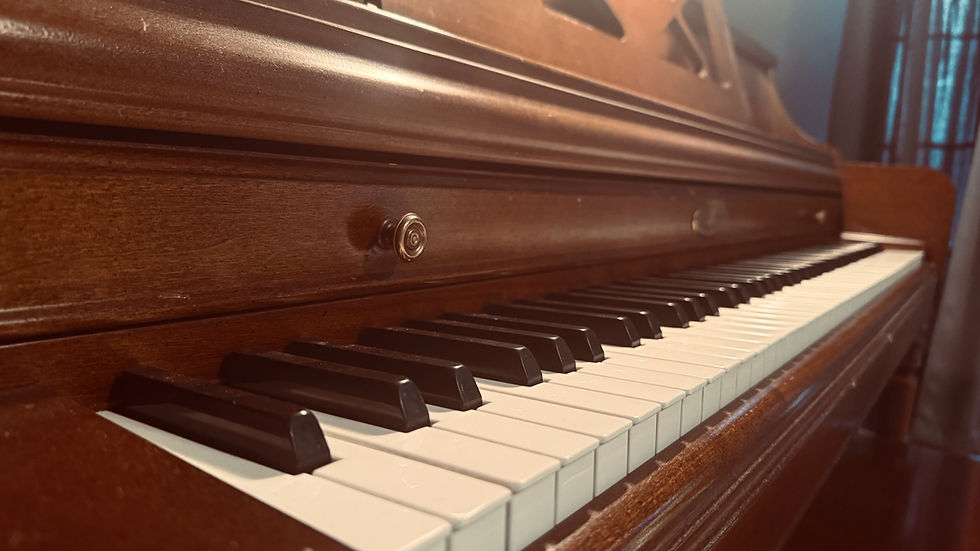
I wrote most of the lyrics when I was 19 and into my early twenties. I composed the music, too, primarily on the piano I still have in my living room. A few times, I even performed them at church or other gatherings. By the time I had eye surgery in mid-1996, I’d written close to 30 songs.
But I couldn’t make the recordings sound the way I heard them in my head. I didn’t have the means to produce them as I imagined them. Cassette tape recordings and homemade CDs never quite turned out as intended, and it seemed unlikely I’d attract the attention of the professional music industry with that kind of output—especially in 1996.
Then the surgery went wrong.
For about three years, my vision was so limited that I could barely see, even inches in front of my face.
The world devolved into a blur. Familiar faces blended with strange ones, and the only place I wanted to be was in a dark room, alone. I retreated inward.
Thankfully, my music was waiting for me there.
I spent much of that time sitting at the piano in the dark, eyes closed, playing the music and singing the words. In my mind, I heard arrangements and sounds far beyond what I could produce on my own. I sometimes wonder whether that experience sharpened the "symphony" I heard inside.
As always, life moved on. A new doctor brought upgraded eyes, and then getting married and starting a family took center stage, and the music took a back seat.
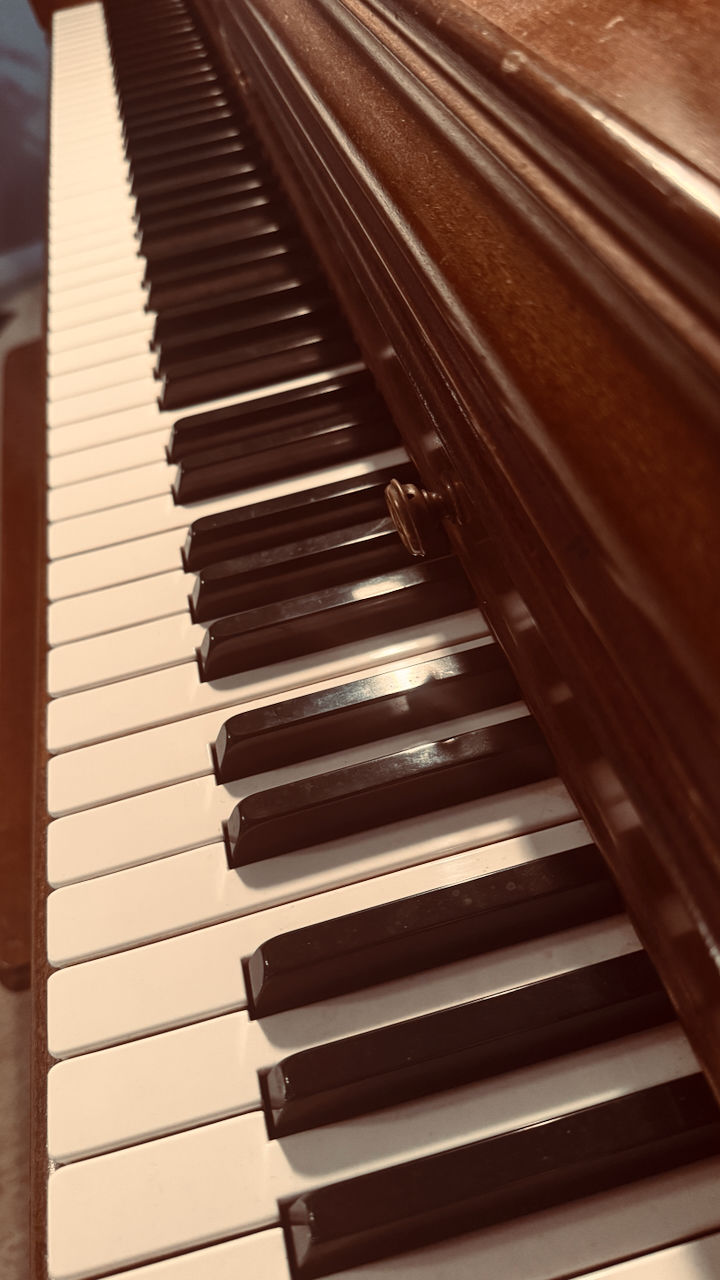
The songs stayed with me.
Some survived in a binder; others were recorded on cassette, where the static rivaled my own singing voice. Not all the music had been written down, and some melodies faded. Even some lyric printouts were lost to multiple house moves and damp basements.
But the ones that mattered most—never left.
For over 30 years, I heard the songs as they might have been and kept imagining what they could have sounded like, given different talents. As I've aged, I didn’t want them to remain only in my memory or tucked away in a binder, so I began looking for a way to bring them closer to what I’d always heard in my head.
That’s where generative AI—and Suno in particular—came in. To help produce professional recordings of the songs I’d written, I used Suno's music creation platform.
To be clear, this wasn’t a matter of asking a program to invent songs for me like the ones you hear today on social media.
The lyrics were mine, written decades ago.
The music, melodies, and the way I heard the songs were mine, too.
What was missing was a way to explore arrangements and production I couldn’t create on my own. Suno provided that ability.
It took a lot of work, though.
I generated version after version, adjusted styles and genres, even reworked a few lyrics, and kept tinkering until the songs began to sound like the ones I’d carried in my head all this time.
They’re not a perfect copy of what I imagined—but, in many cases, they’re 95% or more of the way there. Closer to 99.9999% in a few rare cases.
The most surprising part was how naturally a few of the songs seemed to come together. The cadence and syllables of my lyrics often seemed to guide the songs toward melodies and performances that felt familiar—as though I were hearing again the music I’d sung to myself at the piano decades ago. When one of my favorite songs finally sounded worthy of what I’d imagined, I had to hold back a few tears.
I know generative AI is a complicated subject, particularly in the book world.
I also know people may wonder whether using it for these recordings means it was involved in my books. To be clear, it was not involved in writing my books. These songs are a separate project: I wrote their lyrics and composed their musical ideas years before I used Suno to help produce the recordings.
And, as of September 2026, Suno launched AI music models built entirely on licensed datasets in deals with major music studios. This means it was trained legally and ethically, and I produced all of my songs with this version.
I see the recordings, in part, as a way to share the songs—and perhaps as a songwriter’s calling card. My hope is that another artist might one day perform them live, whether in an intimate venue, a mid-sized concert hall, or even a sold-out stadium.
That may or may not happen. If it does, I'll be in the front row, trying to hold back those tears.
I'll keep hoping and praying for that, but for now this is the first step. I want people to hear the words and sounds that have stayed with me for so long. I hope they affect you as deeply as they’ve affected me.
Each song has its own history and meaning, and the album page shares more of those stories. Be sure to check it out to discover how each one came to be. For now, I’m glad these songs have finally found their way out of my head and into the world, available on Spotify, Apple Music, and more on November 18, 2026.
And that’s what DryWrites has always been for: all of the things I write. Thank you for being a part of it and going on the journey with me.
The books were one part.
Now I’m making room for the songs, too.



Comments